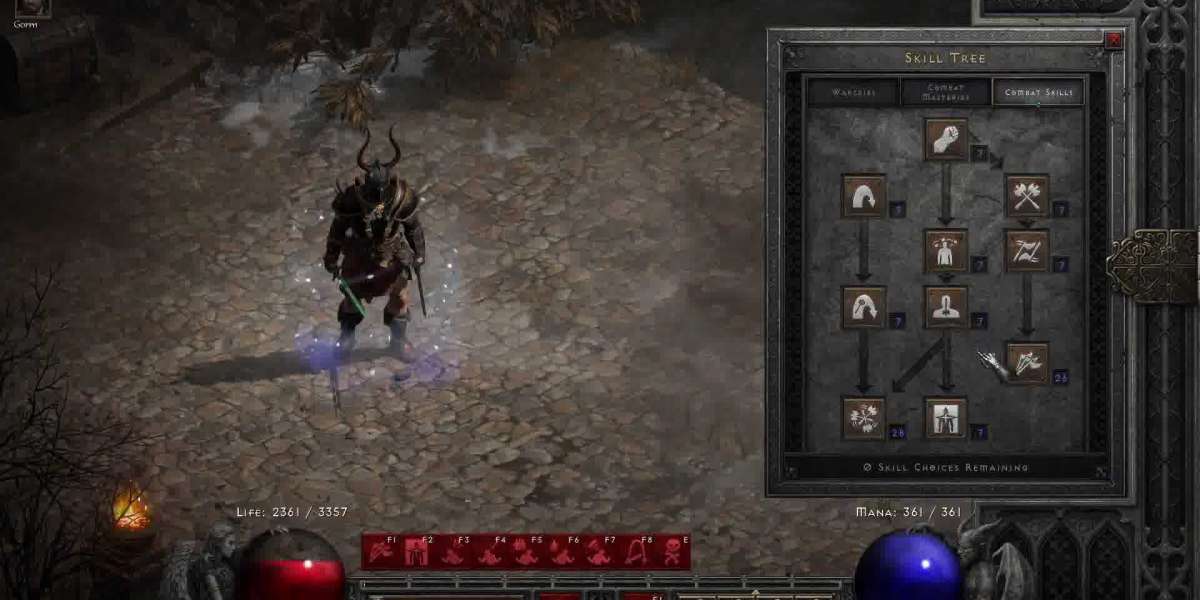

Diablo II: Resurrected is a game built around exploration. From the moment a new character steps outside the safety of the Rogue Encampment, Sanctuary becomes a dangerous landscape filled with hostile creatures, mysterious ruins, forgotten tombs, and increasingly powerful demons.
Originally released in 2000, Diablo II became one of the defining titles of the action RPG genre. Resurrected preserves that classic adventure while rebuilding its presentation for modern audiences. The result is a game where familiar locations feel new again and character development remains as flexible as ever.
A Journey Through a Dark Fantasy World
The world of D2R Items is divided into several acts, each presenting its own visual identity and atmosphere. Players travel through wilderness areas, ancient structures, deserts, jungles, icy landscapes, and ultimately the domains associated with Hell.
The visual remaster makes these environments particularly impressive. Dark corridors are filled with atmospheric lighting, while outdoor areas feature greater environmental detail and depth. The desert around Lut Gholein feels expansive, while locations such as the Forgotten Tower emphasize the game's gothic horror influences.
The enhanced presentation does not erase the game's original personality. Instead, it allows the same environments to communicate their atmosphere more effectively on modern hardware.
For players who prefer nostalgia, the Legacy graphics option provides a direct connection to the original presentation. Switching between versions highlights the enormous technical transformation without changing the fundamental adventure.
Seven Heroes, Seven Approaches to Combat
Choosing a class is one of the first major decisions in Diablo II: Resurrected, and it can dramatically change the way the game feels.
The Sorceress is ideal for players who enjoy elemental magic and mobility. Her skill trees cover fire, cold, and lightning abilities, while teleportation gives her exceptional movement potential.
The Necromancer approaches combat differently. Instead of relying primarily on direct attacks, he can summon undead allies, use curses, and exploit corpses. A well-developed Necromancer can turn the battlefield itself into a source of power.
The Paladin combines physical combat with powerful auras. These abilities can enhance the Paladin and allies, making the class particularly flexible.
Barbarians represent a more direct approach. They specialize in weapons, physical attacks, shouting abilities, and aggressive movement. Their ability to use multiple weapons contributes to a distinctive melee experience.
The Amazon is suited to players who prefer ranged combat or javelins. Her abilities can introduce elemental effects and powerful attacks that allow her to fight effectively from a distance.
The Druid offers perhaps one of the broadest thematic options. Players can summon animals, use elemental magic, or transform into powerful creatures such as Werewolves and Werebears.
Finally, the Assassin combines traps and martial arts. She can prepare dangerous areas with traps before engaging enemies directly, or use fast martial combinations to overwhelm opponents.
Builds Give the Classes Their Identity
Selecting a class is only the beginning. The skill system allows players to specialize that character according to their preferred style.
This is where the famous build culture surrounding buy D2R Runewords comes from. A Paladin might develop into a Hammerdin, focusing heavily on Blessed Hammer. A Sorceress could become a Frozen Orb specialist, while another character of the same class might focus on lightning.
The same principle applies to every class. Equipment, skill points, attributes, and supporting abilities can all interact to create a specialized character.
Because players cannot simply master every skill simultaneously, building a character involves meaningful choices. These choices also encourage experimentation across multiple characters.
Equipment Drives Progression
Character skills provide the foundation, but equipment can completely transform a build.
Weapons and armor come with different qualities and modifiers. Unique equipment provides recognizable special effects, Sets offer themed combinations, and charms can provide useful bonuses while occupying inventory space.
Runes add an especially interesting layer. When placed into socketed items in the correct order, they can create Runewords with powerful properties.
The hunt for these upgrades gives the game much of its replay value. Players may repeatedly challenge bosses or explore certain areas because they are searching for a particular item or rune.
Players interested in D2R Items often discuss the most useful equipment combinations, while some communities also explore options to buy D2R Items as an alternative route to obtaining particular gear.
Convenience for a New Generation
Despite its old-school foundations, Resurrected contains several features designed to reduce unnecessary friction.
The Shared Stash is especially valuable for players with several characters. Gold can be picked up automatically if the option is enabled, and item-comparison tools provide more information when evaluating equipment.
Controller support makes the game accessible to players who prefer a gamepad, while cross-progression on supported platforms provides additional flexibility.
Importantly, these changes do not replace the core gameplay. They simply make it easier to interact with systems that were originally designed for a very different era of gaming.
A World Worth Revisiting
Diablo II: Resurrected offers more than upgraded graphics. It brings back a world where exploration, combat, character development, and loot are tightly connected.
Every new character provides another opportunity to approach Sanctuary differently. Every dungeon can contain a useful discovery, and every difficult enemy represents another test of a carefully developed build.
That combination explains why the game remains relevant decades after its original release. Resurrected does not merely preserve an old adventure. It gives modern players a chance to discover why that adventure became so influential in the first place.